

February marked a turning point as AI, regulation and monetisation collided across the search landscape. EU publishers formally challenged Google’s AI Overviews, while Google launched its first Discover-specific core update, turning Discover into its own visibility battleground. AI search continues to evolve, with more prominent source links in Overviews and growing evidence that AI is influencing decisions long before a click. At the same time, conversational AI officially became a paid media channel as ChatGPT began testing ads, agentic infrastructure accelerated with new standards and AI-performance measurement tools, and social visibility grew more tightly connected to search exposure.
Here’s what changed across Google, AI, Agentic, Social, and Paid and what it all means for brands navigating the next phase of search.
Google Search
What changed this month: Regulatory pressure is mounting around AI-powered search, while Google continues expanding where and how visibility is earned. With Discover now treated as its own optimisation surface, search is becoming less about universal rankings and more about how content performs across distinct, evolving environments.
EU publishers file antitrust complaint against Google’s AI Overviews
The European Publishers Council has filed a formal complaint with the European Union, arguing that Google’s AI Overviews use publisher content without sufficient consent, attribution, or compensation, threatening the sustainability of the open web and news economics.
Why it matters: Regulatory scrutiny around AI summaries is intensifying. If the EU forces changes to how AI Overviews cite, compensate, or allow publisher opt-outs, it could materially alter organic visibility and traffic flows across Europe. Brands and publishers should monitor this closely.
Google releases its first Discover-specific core update
Google has launched its first-ever core update focused solely on Discover, separate from traditional search rankings. The update prioritises locally relevant expertise, original reporting, and in-depth content, while reducing exposure for sensational or clickbait-style articles.
Why it matters: Discover is becoming its own performance channel. Success will depend on topical authority, localisation, and genuine expertise. Brands relying on high-volume, generic content may see reduced Discover exposure, while specialist and locally relevant publishers stand to gain.
AI Search
What changed this month: AI search this month focused on visibility, local impact, and measurement. Google adjusted AI link presentation, local packs began shifting toward AI formats, and new research highlighted how AI assistants influence decisions long before a click happens.
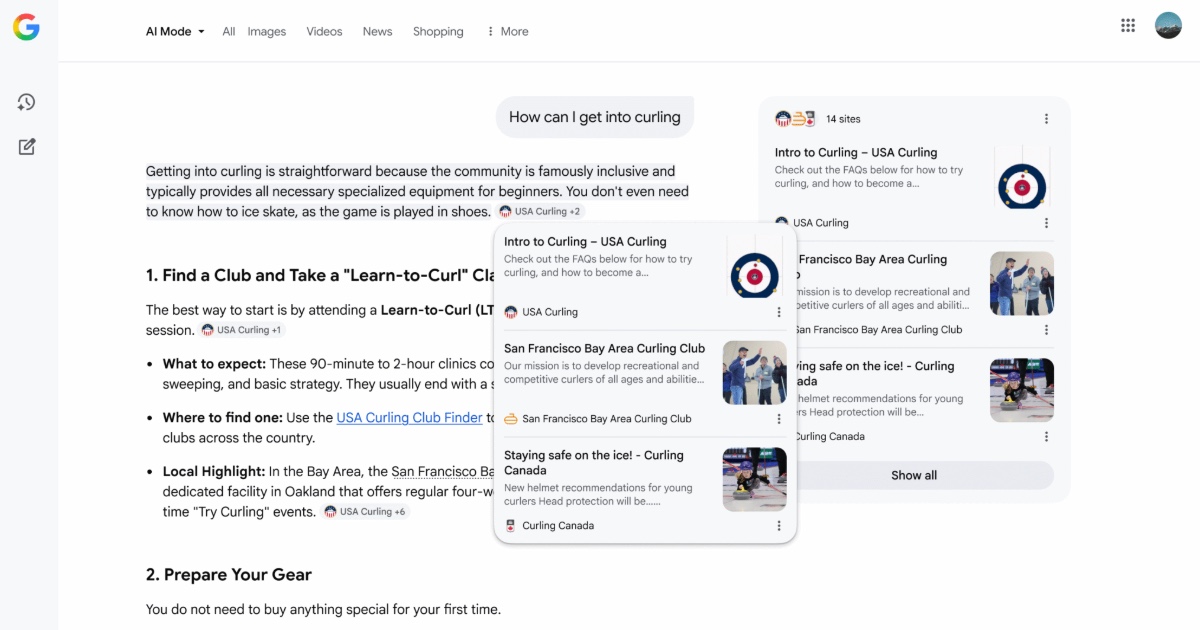
Google makes links more visible in AI Overviews & AI Mode
Google is rolling out a new design in AI Overviews and AI Mode, where grouped source links appear more prominently. On desktop, links now surface on hover with clearer icons and descriptive snippets.
Why it matters: This responds to publisher concerns that AI summaries suppress clicks. More visible links could restore some traffic but only for sources clearly cited. Being included inside AI answers is now step one; earning the click is step two.
Google calls AI search an “expansionary moment”
Google reported that AI Overviews and AI Mode are driving longer, more conversational queries, with increased use of voice and image search.
Why it matters: Search is becoming a dialogue, not a single query. Brands must optimise for inclusion across follow-up questions, not just initial rankings. Visibility now happens inside extended conversations before users ever click.
AI search experiments reveal hidden buying influence
User journey studies show people often discover brands through AI assistants without ever clicking a search result. Users arrive informed, referencing AI recommendations even when analytics show no prior traffic source.
Why it matters: Traffic no longer equals influence. AI answers can shape consideration invisibly, outside traditional attribution models. SEO success must be evaluated beyond sessions and clicks, influence may happen before analytics can detect it.
AI is quietly reshaping Local SEO
Analysis of nearly 180 local listings shows traditional top-ranked businesses are seeing declining engagement and calls year over year. Meanwhile, AI-driven Local Packs now appear for around 8% of tracked keywords and rising, often replacing the traditional 3-pack on mobile in the US.
Why it matters: AI Local Packs are beginning to replace familiar local formats. Rankings alone won’t protect visibility. Brands need strong reviews, positive sentiment, structured local schema, and consistent brand signals to maintain lead flow.
Agentic Search
What changed this month: February highlighted a new layer of search infrastructure: tools and standards designed specifically for AI agents, not human browsers. As agents begin to browse, extract and act on content directly, how websites serve and structure information is becoming a competitive factor.
Cloudflare launches Markdown for Agents
Cloudflare introduced Markdown for Agents, a feature that automatically converts HTML into markdown when an AI agent requests it using a text/markdown header. This reduces token load, improves readability for AI systems, and can lower processing costs. The feature is opt-in for Pro, Business and Enterprise users and includes token count estimates in the response header.
Why it matters: This marks the rise of an AI-consumption layer in web infrastructure. Optimising how AI systems ingest content may soon be as important as optimising for human UX. Cleaner, structured content could improve how generative tools interpret and reference your pages.
Counterpoint: Some experts warn this could enable cloaking-like behaviour, where different content is served to AI agents versus humans. If abused, this risks creating a “shadow web” for bots, raising concerns about trust, transparency and content integrity.
Google previews WebMCP for AI–website interaction
Google released a preview of WebMCP (Web Machine Control Protocol), outlining how AI agents should browse, access data, fill forms and interact with websites. The framework provides guidance for developers and site owners to signal preferred agent behaviours and manage interactions safely.
Why it matters: Search is shifting from passive indexing to interactive agent behaviour. Sites may soon need to optimise not just for crawlability, but for safe, predictable AI actions. Many technical SEOs are calling this one of the biggest shifts since structured data.
Microsoft introduces AI Performance in Bing Webmaster Tools
Microsoft launched AI Performance in public preview within Bing Webmaster Tools, allowing publishers to track how often their content is cited in AI-generated answers across Bing and Copilot. The dashboard includes citation counts, grounding queries and page-level reference data.
Why it matters: This is one of the first dedicated tools offering AI visibility measurement directly from a major search platform. Traditional metrics like rank and CTR don’t show whether AI systems are using your content. Citation tracking opens a new performance layer, one focused on inclusion and grounding rather than clicks alone so brands can measure their influence in AI.
Social Search
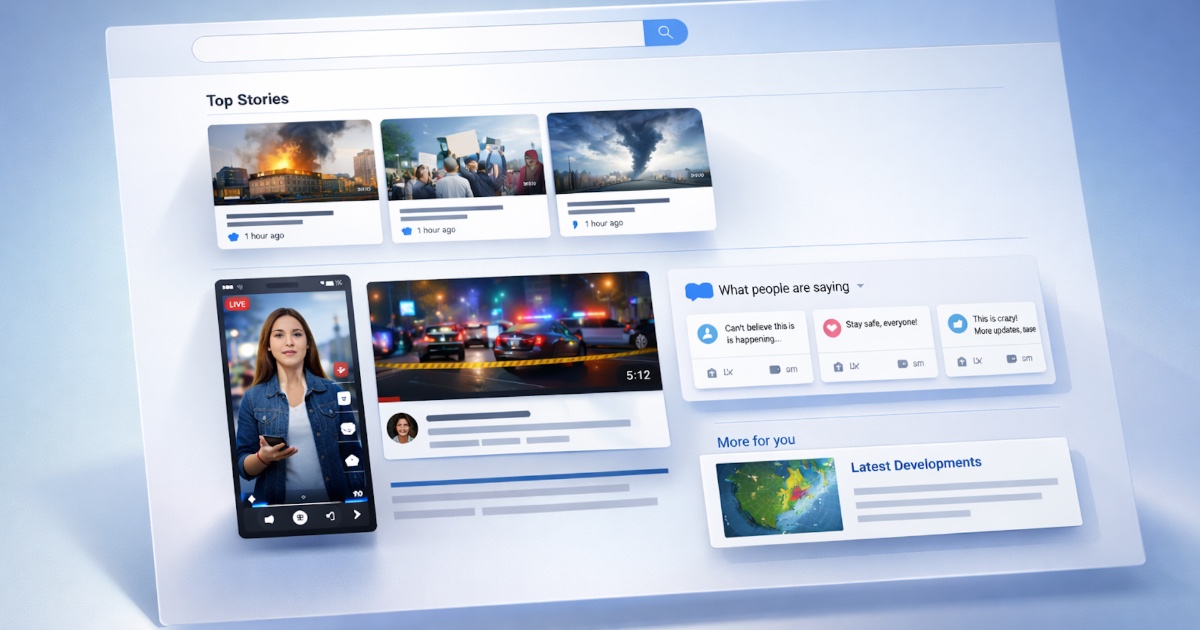
What changed this month: February reinforced how tightly social and search are now connected. Google shared new guidance on optimising news and publisher content for a world where social engagement increasingly feeds into search visibility.
Optimising news content for social-first discovery and Google SERPs
Google outlined best practices for publishers looking to improve performance across both social platforms and Search. Social posts, short-form videos and community discussions are now appearing more frequently in SERP features such as carousels and “What people are saying.”
Why it matters: Social visibility is no longer separate from SEO performance. Engagement on platforms can influence how content surfaces in Google, impacting referral traffic and brand discovery. Content strategies must now account for both how posts perform natively and how they translate into search exposure.
Paid Search
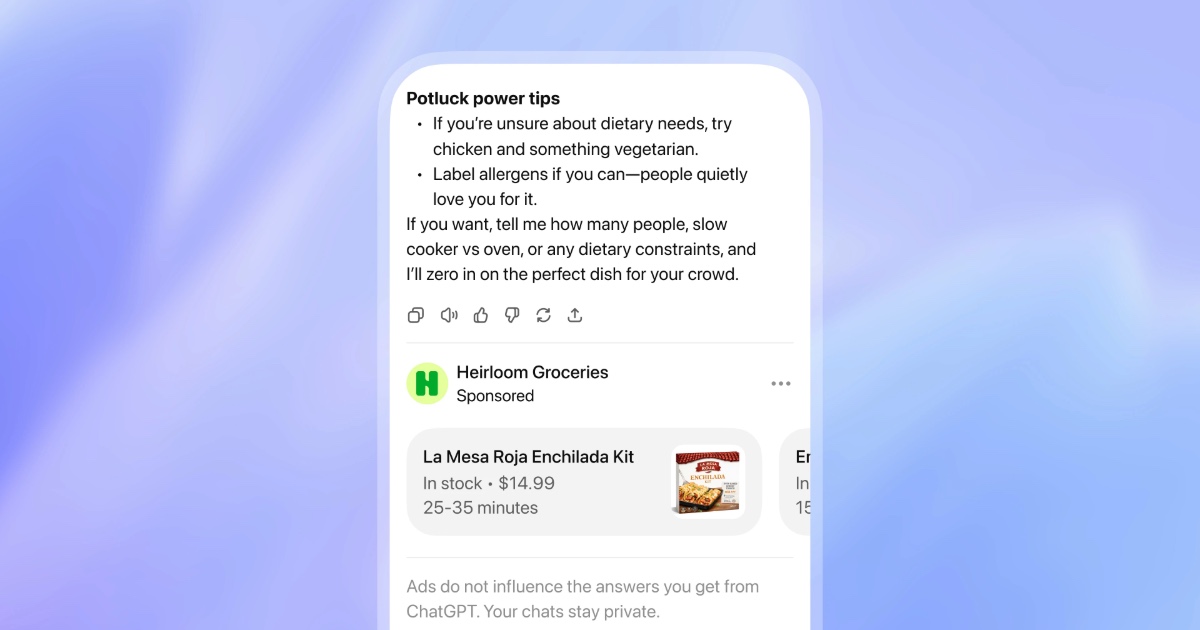
What changed this month: Conversational AI officially became a paid media channel, while Google continued expanding automation controls. At the same time, not every AI platform is choosing the ad-funded route, creating a fragmented commercial landscape.
OpenAI begins testing ads inside ChatGPT
OpenAI has started testing ads inside ChatGPT for Free and Go users in the US. Ads are clearly labelled and appear beneath relevant responses, particularly in shopping-led queries. For example, asking what running shoes to buy may now surface sponsored placements within the conversational experience.
Why it matters: This is the first real step toward conversational AI as a paid media channel. It’s not traditional keyword bidding, but it is commercial inventory inside high-intent moments. Foundations now matter more than ever: clean product feeds, structured data, strong PDP content and competitive pricing will likely influence visibility. Early access will be limited and expensive, favouring brands already recommended by LLMs and operationally ready.
Google expands campaign total budgets in open beta
Google Ads has rolled out campaign total budgets across Search, Performance Max and Shopping. Advertisers can now set a fixed total budget for a campaign flight and let Google automatically pace spend to ensure it is fully used by the end date.
Why it matters: For fixed promotional windows, launches or seasonal campaigns, this simplifies pacing. It’s another signal that Google is doubling down on automation. The trade-off will be less day-to-day control, meaning conversion tracking and clear objectives become even more critical.
Perplexity AI signals it will not pursue ads
While OpenAI moves into advertising, Perplexity has confirmed it is stepping away from ads as a monetisation model, citing trust and user experience concerns.
Why it matters: AI engines are not moving in one direction. Some will become paid media environments; others will rely on subscriptions. For brands, this means two parallel priorities: paid AI inventory is emerging while organic AI visibility remains essential.
What Happened Last Month
January showed just how quickly search is moving from discovery to execution. Google continued turning the SERP into a conversational, AI-first experience, while regulators and publishers pushed back on how content is used and rewarded. AI platforms focused on scale and governance, from age-based safeguards to ChatGPT confirming it will begin testing ads inside answers, marking a major shift in how AI experiences are monetised. At the same time, social platforms leaned further into intent-led discovery, paid media moved deeper into commerce and AI experiences, and new search surfaces emerged that challenge how visibility, trust, and performance are measured.
Read the full January Search Update here.