

Your November search update for Google, AI, Social and Paid. Google’s latest data shows just how much AI Overviews are reshaping behaviour, with organic CTR dropping 61% and paid CTR falling 68% on affected queries, a clear sign that visibility now sits inside AI answers, not around them. OpenAI continued its push into the browsing space with new Group Chat collaboration tools and deeper integration across its Atlas ecosystem. Social platforms also shifted gears, with Snapchat preparing to embed Perplexity AI as an in-app search engine and user behaviour moving toward more creation than passive browsing. Meanwhile, Meta rolled out early tests of ad-free subscriptions, raising big questions about the future of social monetisation.
And in a standout moment for us at Greenpark, our UFS Search in-house team was recognised with the Marketing Effectiveness award at the Campaign UK In-House Agency Awards for the work they’ve done to adapt to and stay ahead of this year’s search disruptions.
Here’s everything that happened in the world of search and what it all means for brands.
Google Search
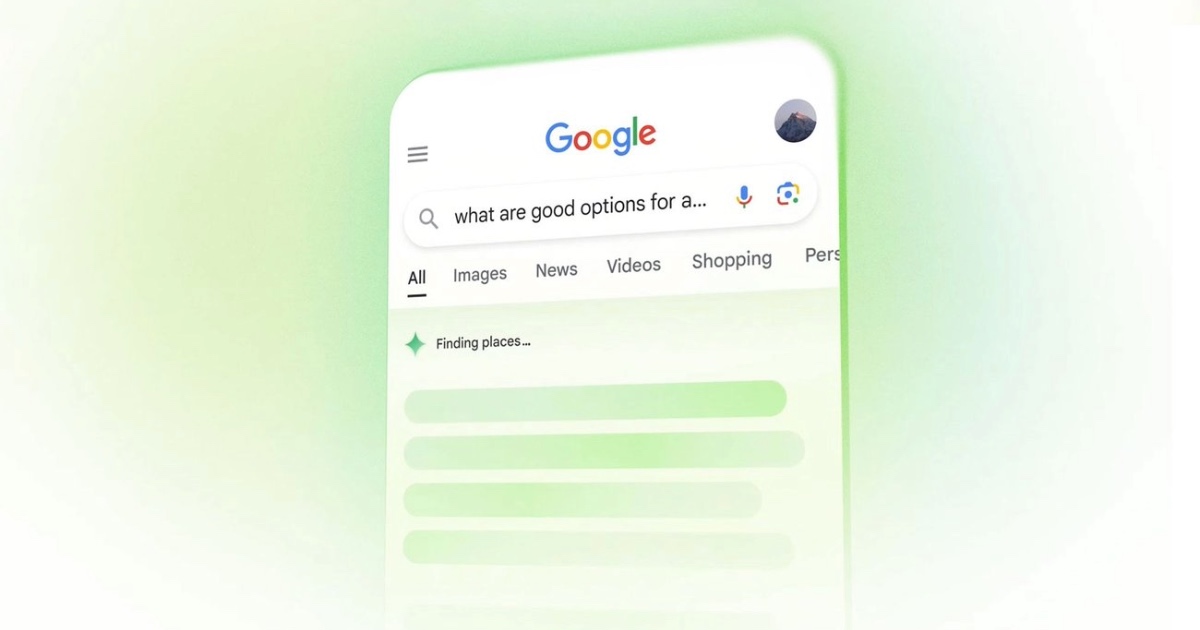
What changed this month: November brought a clearer picture of how AI is reshaping search performance and reporting. CTRs continue to fall as AI Overviews take centre stage, Google has added new tools that sharpen visibility analysis, and our own UFS Search team picked up a major industry award for the work they’ve done to adapt performance thinking in this new landscape.
Google AI Overviews drive 61% drop in organic CTR, 68% in paid
A study from Seer Interactive found that for informational queries featuring AI Overviews, organic CTR has dropped 61% since mid-2024 with paid CTR falling 68% on the same results. Users are increasingly getting answers directly from AI, bypassing both the organic blue links and the sponsored ads.
Why it matters: AI Overviews reshape the click curve entirely, brands relying on traffic volume alone will feel the hit. But this also reinforces something we’ve been saying for a while: traffic as a standalone metric is fading in relevance. Brands must pivot to measuring qualified traffic, share of voice within AI surfaces, conversion, and brand preference.
To understand more about the new measures of success in the AI-driven search landscape, listen to our November podcast with Brandlight.
Related: UFS Search Team Wins Marketing Effectiveness
Greenpark and Unilever Food Solutions won Marketing Effectiveness at the Campaign UK In-House Agency Awards 2025 – a direct reflection of how we pivoted early to the new AI-led search landscape.
Why it matters: As AI rewrote visibility rules, we stopped chasing volume and doubled down on value. By aligning search, content and conversion across 49+ UFS markets, we turned AI-induced uncertainty into strategic advantage and commercial impact. It’s proof that when creativity, data and intent work together, visibility stops being a vanity metric and starts generating revenue.
Custom chart annotations now available in Search Console
Google now allows teams to add custom annotations to performance charts in Search Console. You can mark technical fixes, content launches, migrations, experiments or algorithm reactions directly onto the graph.
Why it matters: This solves a long-standing pain point. Instead of guessing why metrics moved, we can now tie fluctuations directly to real events. It makes reporting clearer, post-mortems faster, and collaboration across SEO, dev, product and content teams far more efficient.
Branded Queries filter launches in Search Console
Google has introduced a new Branded Queries Filter in Search Console, enabling teams to separate branded vs. non-branded traffic across all search types. The filter can be applied across web, image, video and news results, giving a more complete picture of how audiences find a site.
Why it matters: Brand search often hides declining organic performance, especially for large, well-known brands. Being able to isolate discovery traffic (non-brand queries) finally gives SEOs and marketing teams a more accurate view of where they’re winning and where they’re losing. It also helps justify more strategic investment in content, authority building and optimisation.
AI Search

What changed this month: AI platforms continued reshaping discovery and content creation, with new user controls on TikTok, upgraded generative tools from Google, mixed evidence on LLMs.txt, and major collaboration and research updates from OpenAI and Google. Meanwhile, Big Tech’s infrastructure investment signals that the AI shift isn’t slowing down anytime soon.
TikTok gives users control over how much AI content they see
TikTok is introducing a new control that lets users reduce the amount of AI-generated content in their feeds, a notable move given the platform now hosts over 1 billion AI-made videos.
Why it matters: This sets a potential precedent. If other platforms adopt similar filters, brands using AI-generated video risk being filtered out by default, leading to drops in reach and views. As AI content becomes ubiquitous, audiences and platforms may start favouring more human-led creativity.
Google enhances the Gemini app with new creation tools
With the release of Gemini 3, Google has upgraded the Gemini app’s media generation features, including improved image tools, better video creation through Veo 3.1, and a more intuitive prompt-to-media workflow. New engines like Nano Banana Pro raise asset quality for marketing applications.
Why it matters: For search and social teams moving fast, this is a productivity unlock. Faster, higher-quality generation means quicker testing, iteration, and production – supporting omnichannel content strategies where speed and consistency are essential.
LLMs.txt shows no clear effect on AI citations (300k-domain study)
SE Ranking analysed 300,000 domains and found no correlation between using LLMs.txt and being cited more often by major AI models. Adoption remains low (just 10.13%), and statistical and machine-learning tests showed that LLMs.txt didn’t improve citation likelihood, aligning with guidance from Google and OpenAI.
Why it matters: This helps cut through the hype. LLMs.txt is not a magic AI SEO lever, it’s a low-risk experiment at best. The fundamentals still matter most: quality content, clean site structure, authoritative backlinks, and great user experience. These remain the real drivers of visibility in both AI discovery and traditional search.
ChatGPT launches global Group Chats
OpenAI has released Group Chats across all ChatGPT plans, allowing up to 20 people to collaborate with AI in a shared conversation. ChatGPT now supports tagging, summaries, comparisons, and team decision-making, while personal chat history remains private.
Why it matters: ChatGPT is evolving from a solo assistant to a collaborative workspace. For SEO, content, and omnichannel teams, this means faster brainstorming, analysis, and planning all in one thread. It reduces tool fragmentation and accelerates day-to-day workflows.
NotebookLM gains deeper research capabilities with Gemini integration
Google upgraded NotebookLM with better source analysis, improved reference tracking, and stronger summarisation of long documents. Google also hinted at tighter future integration with Gemini for enhanced retrieval and reasoning.
Why it matters: This elevates research-heavy workflows such as insights gathering, competitive analysis, and long-form content planning. NotebookLM becomes a powerful way to generate reports, mind maps, flashcards, slide decks, and more – faster and with greater depth.
Big Tech continues heavy AI infrastructure investment
Despite broader market uncertainty, major tech companies are doubling down on AI infrastructure – building data centres, expanding compute, and scaling cloud capacity to meet long-term AI demand.
Why it matters: This signals that AI-driven search, generative surfaces, and new discovery formats will continue accelerating. For marketers, the message is clear: stay agile, as the tools powering AI search will keep evolving and so will the behaviours of the audiences using them.
Social Search
What changed this month: Social search continued to evolve fast, with Snapchat moving toward an AI-powered search future and user behaviour shifting from passive browsing to active creation. As platforms become full-funnel ecosystems driven by UGC, brands will need to rethink how they show up inside social search results.
Snapchat plans to integrate Perplexity AI as an in-app search engine
Snapchat has announced a partnership with Perplexity AI, bringing conversational search directly into the app from 2026. Users will be able to ask questions and receive contextual answers without leaving Snapchat, positioning the platform as a hybrid space for messaging, content, and information search.
Why it matters: Snapchat is becoming a social search engine for younger audiences. As Gen Z continues to search socially before they search on Google, brands may need to consider Snapchat search optimisation the same way they would for TikTok or Instagram. The discovery journey is fragmenting, and Snapchat is stepping into the race.
User behaviour shifts: more creation, less passive browsing
New data shows that users on TikTok, Instagram and Snapchat are publishing at higher rates than ever and more than half of users report making direct purchases from social platforms, turning them into true full-funnel channels. As user-generated content scales, it’s increasingly shaping in-platform search results.
Why it matters: UGC can now outrank brand content inside social search and it naturally feels more trustworthy. Brands need a stronger social search strategy: optimising content for platform queries, partnering with creators, and ensuring brand presence is discoverable in a landscape where consumers are both the audience and the algorithm.
Paid Search
What changed this month: Google has begun weaving paid ads directly into AI-generated answers, signalling the next phase of monetisation inside AI surfaces. As search results shift from lists to summaries, paid visibility is moving inside the answer itself where user attention is already captured.
Google Ads begin appearing inside AI Overviews
Google has begun placing paid ads directly inside AI Overview panels, expanding tests beyond the US into more English-speaking markets. These ads sit within the AI-generated answer box, styled to blend naturally with the generative layout while remaining clearly labelled as sponsored.
Why it matters: Paid visibility is shifting into the AI answer itself, where user attention is strongest. This change will impact bidding strategies, creative formats and measurement. Success will rely less on position and more on how well ads align with AI-interpreted intent. Understanding your presence inside generative surfaces is now essential.
In other news

What changed this month: Elon Musk’s xAI is entering the knowledge arena with Grokipedia, a Wikipedia-style platform powered by AI. It’s another sign that the web’s long-standing information sources are being reimagined by generative systems.
Fears of a trillion-dollar AI bubble are growing
Tech giants continue pouring staggering amounts of money into the AI arms race, building data centres, buying advanced chips and scaling infrastructure for tools like ChatGPT, Gemini and other AI workloads. Analysts warn that total investment could reach trillions, fuelled by venture capital, debt financing and unconventional funding models.
Why it matters: Some experts fear this spending spree may be ahead of real-world returns, especially if AI adoption slows or operational costs remain extremely high. If that happens, parts of the AI ecosystem could become overvalued or even stranded. For marketers, it’s a reminder to stay grounded: AI’s growth is undeniable, but long-term strategies should be built on proven impact, not speculative hype.
What Happened Last Month
Your October search update for Google, AI, Social and Paid. Google’s reporting delays in Search Console caused sudden dips in dashboards, but don’t panic, performance hasn’t actually dropped (we’ll explain). OpenAI launched ChatGPT Atlas, their new AI-powered browser, raising new questions about clicks, attribution, and ad reliability. Pinterest rolled out AI-driven recommendation features, turning static boards into personalised, shoppable discovery engines. Meta began testing ad-free subscriptions, signalling a major shift in how social platforms monetise audiences.
Read the full October Search Update here