
September put measurement and action at the centre of search. Google admitted its AI Search Console reporting still falls short, even as it introduced new visibility into multimodal search, while AI agents moved closer to completing entire journeys with hotel bookings and multi-step tasks. Social search followed the same path, with Reddit, Pinterest and YouTube turning community conversations, images and creator reviews into AI-powered shopping experiences. Paid media is evolving with it, as Google tests traditional Search ads inside AI Mode and OpenAI turns ChatGPT ads into two-way conversations. Search is no longer just becoming more AI-led; the infrastructure for measuring, transacting and advertising within these experiences is now taking shape.
Here’s what changed across Google, AI, Agentic, Social, and Paid and what it all means for brands navigating the next phase of search.
Google Search
Google Admits Search Console Reporting For AI Search Is Inadequate
Google‘s John Mueller acknowledges that Search Console’s AI search reporting falls short in providing the position data SEOs need. In their defence, Google highlighted the inherent complexity of AI search itself.
Why It Matters: The new report in Google Search Console was accessible globally on Aug 31st. The report primarily focuses on impressions but little else. Also Mueller essentially confirmed that the generative AI performance report is inadequate and that Google does not have a better solution yet, accepting shortcomings is the first step to improvement. We may be getting a better report in future.
Google Rolls Out September 2026 Spam Update Globally
Google began rolling out its September 2026 spam update on Sept. 24, applying globally across all languages. Google says the rollout may take up to two weeks, longer than its previous three spam updates this year. The company hasn’t disclosed what specific spam tactics or policies this update targets.
Why It Matters: This is the fourth confirmed spam update of 2026, following updates in March (19.5 hours), June (2 days, 1 hour), and August (2 days, 16 hours), all of which Google described as taking “a few days.” The longer two-week window for September suggests a broader or more complex change to Google’s spam-detection systems, though Google notes the full two weeks isn’t guaranteed. Sites seeing ranking or traffic shifts during the rollout should check Search Console and review Google’s spam policies. Sites found in violation risk lower rankings or removal from results, though compliance changes can help recovery once Google’s systems confirm it over time.
Google Ads Web Multimodal Search Performance Reporting In Search Console
Google Search Console now reports on web multimodal search performance, covering both the standard Search results report and the Generative AI features report. The new data shows how content is surfaced when users search with images, including queries from Lens, Circle to Search on Android, image uploads to Google Search, and Chrome’s “Search this image” right-click feature. Site owners can access this data through a new multimodal search type filter in the performance reports and export it for use in other tools. The rollout began globally on Sept. 24.
Why It Matters: Visual and camera-based search has been growing as part of Google’s broader multimodal push, but until now site owners had no dedicated way to see how their content performed in these searches specifically. This gives publishers a clearer picture of a traffic source that was previously invisible or blended into other reporting, making it easier to gauge whether visual content optimization is paying off. Sites won’t see data populate until they’re actually receiving traffic from these query types.
AI search

Reddit’s Citations in ChatGPT Collapse, Showing How Quickly AI Source Preferences Can Shift
Data from the AI visibility platform PromptWatch shows that by mid-August, Reddit’s share of ChatGPT citations had fallen by 86%. OpenAI made no announcement about de-ranking Reddit, and there is no evidence it deliberately blocked the site. The number of searches ChatGPT ran per response also rose from about 1.08 to 1.83, which suggests it added targeted searches of sources it already judged likely to be useful rather than abandoning broad web searches. In the analysis published September 7, Reddit’s drop was far steeper in ChatGPT than in Google’s AI products.
Why It Matters: Reddit can still influence ChatGPT’s research without appearing in its cited sources, making AI reliance difficult to measure. Different AI platforms also use different retrieval and ranking signals. Key takeaway: don’t rely on one platform or tactic. Build visibility across official, owned and community sources.
Research Shows Google AI Mode Sends Less Clicks & Is A Poor User Experience
A study tracking over 1,000 users found Google sends less clicks and people dislike it. The findings directly contradict Google’s assertions that people love AI search and that it is sending more traffic than ever. The main findings of the paper were:
-
- Google’s AI search features reduce traffic to websites.
- Google’s AI Mode provided a poor user experience and made users less satisfied with Google Search.
- Removing AI Overviews had the effect of increasing clicks to websites without any detectable decline in users’ Google Search experience.
- AI Mode keeps users inside Google’s search experience longer and sends them to websites less often than without AI Mode.
Why It Matters: Google maintains that AI Mode sends more users to the open web and that users prefer it. Furthermore, on the topic of AI, the organisation generally ascertains that AI results are beneficial for websites. This paper suggests the opposite is true. The question is whether research papers such as these will prompt Google to being honest about the impact of AI on search.
Google Tests Paying Publishers For AI Answers Via Search Console
Google is testing a Search Console pilot that pays publishers when their content contributes to Gemini, AI Overviews, and AI Mode answers. The publisher may be eligible for payment if content “contributes significantly” to an AI answer. Just being linked to confirm facts or a citation does not qualify.
Why It Matters: Google is owning the criteria on what “contributes significantly” means. As this is a bit of black box, we can expect publishers – those looking for recompense for declining clicks – to try hitting this criteria. If publishers seek to prioritise payments over traffic, it may decline the quality of those publishers.
On the other hand, this could be a glimpse of what the future of “AI citations” could look like: not attribution through links, but a shared-value system. Google would control the system, while publishers share in exchange for accepting Google’s attribution rules and pricing model.
Agentic search
OpenAI Launches GPT-6 Astra, Its Most Capable Model Yet for Browsing and Computer Use
OpenAI released GPT-6 Astra in early September, and agentic browsing and computer use are central to how the model is positioned. It opened as a limited preview to trusted partners on September 3, 2026 and was released publicly to paid users on September 4, 2026. OpenAI says Astra can navigate websites, work in software, handle documents and spreadsheets, write and test code, and carry out other multi-step workflows on its own. In one demo, Astra used Google Maps to find a pediatrician, went to the practice’s website, and filled in the user’s contact details along with a message asking to establish care.
Why it matters: This shows agentic search moving from finding information to finishing the task. An agent that can search, visit a site, and complete a form means your website is increasingly used by AI as well as by people. The model supports tools including web search, file search, computer use, code execution and image generation, so search is now one step inside a larger workflow.
Key takeaway: make sure the key journeys on your site, such as forms, bookings, and contact pages, are simple, clearly labelled, and easy for an agent to complete.
Google Pushes Search Closer to Agentic Commerce
The shopping journey is changing from search → website → compare → buy, with more research and product comparison now happening directly within Google’s AI-powered search experiences. Google is increasingly helping shoppers research, compare and make purchasing decisions before they reach a retailer’s website.
Why It Matters
This means we need to look beyond rankings and clicks:
- Product understanding: Make sure Google has clear, detailed information about what the product is and what it offers.
- Product data: Keep Merchant Center feeds, product attributes, pricing and availability accurate and up to date.
- Rich product information: Reviews, attributes and conversational product details can give AI more context when evaluating products.
- AI visibility: Start thinking about how often products are surfaced and recommended across AI-powered search experiences.
- SEO + feeds: Product feeds and data are becoming part of the wider SEO and ecommerce strategy, rather than being treated purely as a paid-search or technical task.
We’re not only optimising for the click anymore. We also need to make sure products are understood, discoverable and visible within the AI-led shopping journey.
Google’s AI Mode Now Books Hotels, as Travel Search Becomes Agentic
Google has started turning AI Mode from a research tool into a booking tool. In late August, it began rolling out hotel booking in AI Mode in the U.S. Travelers can describe what they want in plain language, compare hotels and reviews, pick a room, check cancellation terms, and pay with Google Pay. Partners include Booking.com, Expedia, Hilton, Marriott and IHG. Google says the feature is rolling out over several weeks in the United States and in English, and the hotel or booking platform remains responsible for the transaction and customer service.
Why it Matters: AI is increasingly handling the searching and comparing before users make the final booking. Google says hotel results in AI Mode are currently ranked organically, making accurate listing data more important than ever.
Key takeaway: AI Mode’s ranking logic could become a new competitive battleground.
Social search
Reddit Tests an “Ask” Tab and Product Deep Dives in Its AI Search
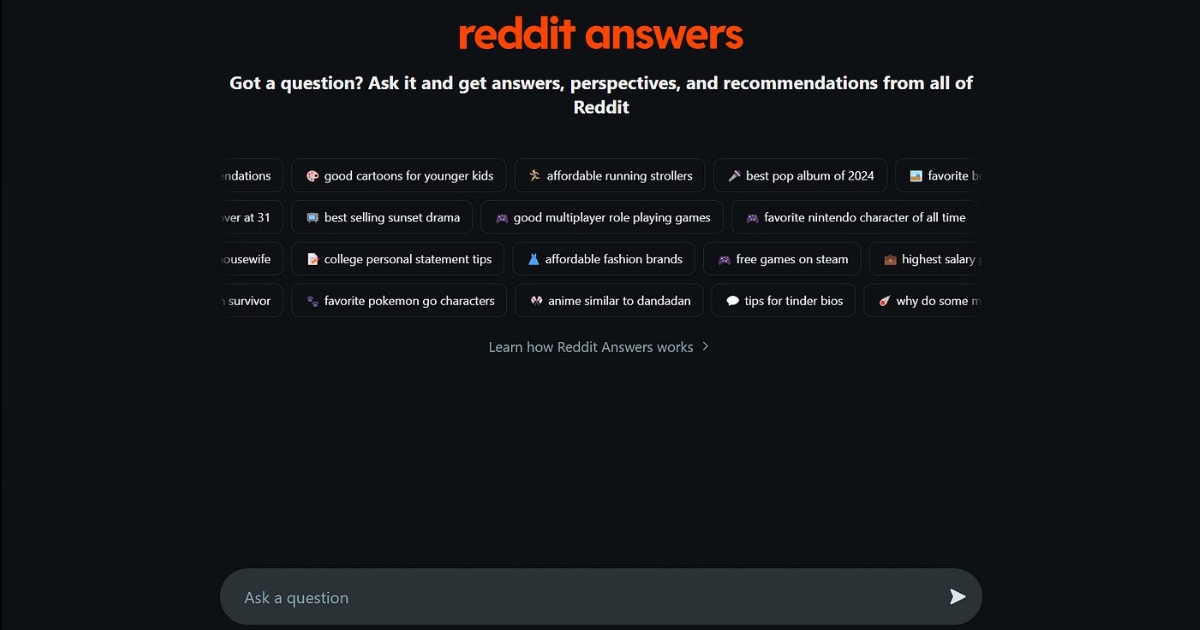
Reddit is testing a new Ask tab in search results, alongside the existing tabs for All, Posts, Communities, Comments, Media, and Profiles. The tab gives quick access to an AI-generated summary of what people on Reddit are saying about a query. The test started in mid-September with a small subset of users worldwide, across all platforms. Separately, product or category questions such as “best noise-canceling headphones” now show a related products carousel at the bottom of AI search results, and tapping a product opens a deeper breakdown.
Why It Matters: Reddit is turning its search bar into an AI answer engine with a shopping layer on top. This builds on May, when Reddit Answers was merged into Reddit search to create one unified search experience. When users search for product recommendations inside Reddit, how your brand is discussed in threads directly shapes the summaries and product carousels they see.
Key takeaway: genuine participation in relevant communities can now directly influence AI summaries and shoppable results.
Pinterest Launches Visual Search Ads as Image-Based Search Becomes an Ad Channel
Pinterest announced Visual Search Ads at Pinterest Presents, its annual advertiser summit, on September 17, 2026. The format places ads in search results and in expanded Pin views, where advertisers can bid for a prominent spot and send users straight to their websites. Pinterest says its users run more than 80 billion searches a month, most of them visual, and more than half have commercial intent. The format works with Pinterest’s AI advertising suite, Performance+, and will enter beta for eligible advertisers in all Pinterest ad markets in the coming weeks.
Why It Matters: This is a clear sign that search is no longer just about typed keywords. Pinterest CEO Bill Ready framed the product around the idea that traditional search ads rely on keywords, while in an AI-driven world people express themselves in much richer ways. Instead of matching text alone, Pinterest combines keyword relevance with its AI understanding of images, so the visual context of a search helps decide which products appear.
Key takeaway: invest in strong, clear product imagery. On visual search platforms, your image does the job your keywords used to do.
YouTube Adds Shopping Features and Custom Feeds to Its “Ask YouTube” AI Search
YouTube is adding shopping features to Ask YouTube, its experimental conversational search tool, and announced the update at its Made On YouTube event on September 23. When people search for reviews of a product, the results may now show videos laid out in a comparison table. Once a viewer picks a review, Ask YouTube can answer questions about the product right on that video’s page. YouTube also announced that viewers can create their own recommendation feeds by describing the topics they want included, and these feeds are pinned to the top of the homepage.
Why this matters: YouTube is turning video reviews into an AI-driven shopping search experience, with products compared before users reach your site.
Key takeaway: prioritise detailed creator reviews and clearly state product names and key specs in videos, titles and descriptions.
Paid search
Google Tests Regular Search Ads Inside AI Mode
Google is testing whether traditional Search ads using exact and phrase match keywords can show up in AI Mode results. Previously, showing up in conversational AI answers required specific AI campaign setups. Now, regular search campaigns can appear whenever a user asks a question with clear buying intent.
Why It Matters: You do not need to rush to change or rewrite your working standard search campaigns just to appear in AI answers. Client teams should keep their high-performing standard campaigns active and track performance. Your normal text ads may automatically gain extra views from AI shoppers without extra effort or cost.
Google expands AI Brief and adds deeper AI Max reporting
Google is expanding its AI-powered advertising capabilities, giving advertisers more ways to understand and manage campaigns using AI Max. The updates include deeper reporting designed to provide greater visibility into how AI influences Search campaigns and customer journeys. The changes reflect Google’s continued shift towards automation across paid search.
Why It Matters: For paid media teams, greater transparency around AI-driven campaigns can help with performance analysis and optimisation. As more campaign decisions become automated, understanding where AI is influencing targeting, creative and delivery is increasingly important. The key takeaway is that advertisers will need to adapt their measurement and optimisation approaches as AI Max becomes a larger part of Google Ads.
OpenAI is turning ChatGPT ads into conversations
OpenAI is expanding ChatGPT Ads with a new format called “Sponsored Agents,” allowing users to have a separate conversation with a business after seeing an ad. The company is also introducing AI-powered campaign creation and management tools, alongside integrations with HubSpot and Shopify.
Why It Matters: This could change how users interact with paid advertising by moving the experience beyond a traditional ad click towards a two-way conversation. For paid media teams, it creates a new opportunity to answer product questions and support consideration within the advertising journey. It also highlights the growing role of AI in campaign creation, optimisation and measurement.
What Happened Last Month
August brought a sharper view of where search is heading. AI visibility became easier to measure as Cloudflare and Microsoft launched new reporting tools, while OpenAI pushed ChatGPT Ads further into Europe. Social discovery also became more searchable, with Google extending Search Console reporting to off-site social content and TikTok giving creators more control over keyword metadata. At the same time, Reddit’s sudden 86% drop in ChatGPT citations was a reminder that visibility across AI platforms can change almost overnight. For brands, the challenge now is not simply expanding presence across more surfaces, but understanding which ones are driving real influence and how stable that visibility really is.
Read the full July Search Update here.